

What is brut champagne? Meaning, types, and taste explained

Learn what brut champagne really means, how it tastes, and how it compares to extra dry, rosé, and Prosecco styles.
You've just popped the cork, and there it is on the label: "Brut." But what does it actually mean?
Here's the no-jargon version. Brut is a style of sparkling wine, specifically the driest, crispest, most widely poured style of Champagne on the planet. If you've ever had a glass at a wedding or toasted the new year, odds are it was brut. This guide breaks down what it means, how it tastes, and how it stacks up against other styles.
The meaning of brut champagne: sweet or dry?
So what does "brut" actually mean? In French, it translates to dry, raw, or unrefined, and it's the driest style you'll find on most store shelves. But here's the thing: brut isn't a type of wine at all. It's a sweetness classification, defined by exactly how much residual sugar made it into the bottle.
By law, brut Champagne can have anywhere from zero to 12 grams of sugar per liter. That's a wide range, but even at the high end, it reads as dry to your palate, with maybe just a faint whisper of sweetness peeking through all that crisp acidity.
Where does that sugar come from? It's added during dosage, the final step in Champagne making, when winemakers top off each bottle with a small mixture of wine and sugar before corking it for good. That sugar level is really the last creative decision a house makes, and it's what separates a bone-dry Brut Nature from a noticeably sweeter demi-sec.
Types of champagne and the sweetness scale
Here's where it gets fun: "brut" is just one stop on a much longer sweetness spectrum. Champagne runs from bone-dry to downright dessert-like, and where a bottle lands depends entirely on how much sugar gets added during dosage.
At the driest extreme sits Brut Nature, sometimes labeled "zero dosage," with no added sugar at all. Next up is Extra Brut, still very dry but with a touch more sugar. Then comes brut itself, the category most of us reach for, followed by Extra Dry (confusingly sweeter than brut), Demi-Sec, which tastes distinctly sweet, and finally Doux, the rare, syrupy-sweet style you'd pair with dessert.
Here's how the tiers stack up:
Style | Sugar (g/L) | Taste |
|---|---|---|
Brut Nature | 0-3 | Bone-dry, austere |
Extra Brut | 0-6 | Very dry, crisp |
Brut | 0-12 | Dry, lightly fruity |
Extra Dry | 12-17 | Off-dry, subtly sweet |
Demi-Sec | 32-50 | Noticeably sweet |
Doux | 50+ | Rich, dessert-sweet |
Walk into almost any wine shop and you'll find the shelves dominated by brut. It's the industry's sweet spot between crisp refreshment and approachable flavor.
The making and taste of brut champagne
Champagne's signature fizz comes from the méthode champenoise, the traditional method where a still base wine undergoes a second fermentation inside the bottle. Yeast and sugar get added, trapping carbon dioxide as tiny, persistent bubbles instead of letting it escape. This process can take years, which is part of why Champagne carries a premium price tag.
The blend usually draws from three grapes: Chardonnay, Pinot Noir, and Pinot Meunier. Winemakers balance these differently to shape the house's signature style, whether that's richer and fuller or lighter and more delicate.
So what does brut actually taste like? Expect crisp acidity up front, with bright citrus, green apple, and a toasty or biscuity note from aging on lees. The finish is clean, dry, and refreshing, never cloying. On the practical side, most Champagne sits around 12% alcohol, with a standard glass running roughly 90 to 95 calories, making brut a relatively light choice for celebrating.
Brut compared to other champagne styles
Once you've got brut figured out, it helps to see how it stacks up against its bubbly cousins. Here's where the sweetness scale and the map come into play.
Brut vs. extra dry champagne
Despite the name, extra dry isn't drier than brut, it's sweeter. Confusing, right? Extra dry Champagne carries 12 to 17 grams of residual sugar per liter, noticeably more than brut's 0 to 12 grams. So if you spot "extra dry" on a label, expect a softer, fruitier pour, not a crisper one.
Rosé champagne vs. brut
Rosé isn't a sweetness level at all. It's a color and style, made either by blending in a touch of still red wine (often Pinot Noir) or letting the juice sit longer on red grape skins. A Rosé Champagne can absolutely be brut, combining that pink hue and berry-tinged profile with bright acidity and a dry finish.
Brut champagne vs. prosecco and cava
Brut shows up well beyond Champagne. Prosecco and Cava can both be labeled brut, since the term simply describes sugar content, not origin. The real differences lie elsewhere: Prosecco hails from Italy and uses a tank method that keeps things light and fruity, while Cava comes from Spain using the same traditional method as Champagne, just with local grapes.
Style | Origin | Sweetness | Best For |
|---|---|---|---|
Brut | France | Dry | Everyday celebrations |
Extra Dry | France | Off-dry | Casual sipping |
Rosé | France | Varies (often brut) | Romantic occasions |
Prosecco | Italy | Varies (often brut) | Brunch, mimosas |
Cava | Spain | Varies (often brut) | Budget-friendly toasts |
Brut champagne brands and price
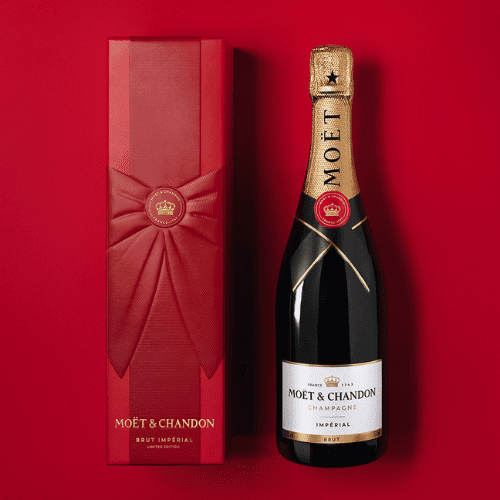
A handful of famous houses dominate the shelf, and their names alone tell you a lot about what's in the glass. Moët & Chandon Brut Impérial is the world's best-selling Champagne, typically running $50 to $80 a bottle. Veuve Clicquot's Yellow Label sits in a similar range, usually $55 to $70, prized for its toasty, Pinot Noir-driven backbone.Both are classic Non-Vintage Champagnes, blended across multiple harvests for a consistent house style year after year. That consistency is exactly why non-vintage brut is the smartest pick for everyday celebrations: reliable quality without the splurge.Want to go bigger? Dom Pérignon, the benchmark Prestige Cuvée, starts around $250 to $300 and climbs fast with rarer vintages. It's extraordinary, but for toasting a Tuesday win, a solid non-vintage brut does the job beautifully.
Frequently asked questions about brut champagne
Is brut the same as champagne?
Not quite. Brut is a popular style, specifically a dryness level, not a synonym for Champagne. All brut is Champagne, but not all Champagne is brut.
Is prosecco just cheap champagne?
No. Prosecco is an entirely different sparkling wine from Italy, made with different grapes and methods. It's not a budget stand-in for quality Champagne, just a distinct style.
What percent alcohol is champagne?
Most Champagne, including brut, sits around 12% ABV. That's similar to many still wines, so pace yourself even though those bubbles make it feel lighter.
What is brut cuvée champagne?
A brut cuvée is a specific dry blend crafted by a house, often combining multiple grape varieties and vintages. People use "cuvée" to describe that signature mix.
How do you pronounce brut champagne?
Say it like "broot," rhyming with "boot." The T stays silent in French, so skip the "brutt" pronunciation many people default to at first.
What is the best champagne for mimosas?
A crisp, affordable brut works best for mimosas. Its dryness and acidity balance the orange juice's sweetness without getting lost or tasting flat in the mix.
The House
NEWS
Let’s stay in touch !
Sign up to our newsletter to receive our latest news, special offers and more…